
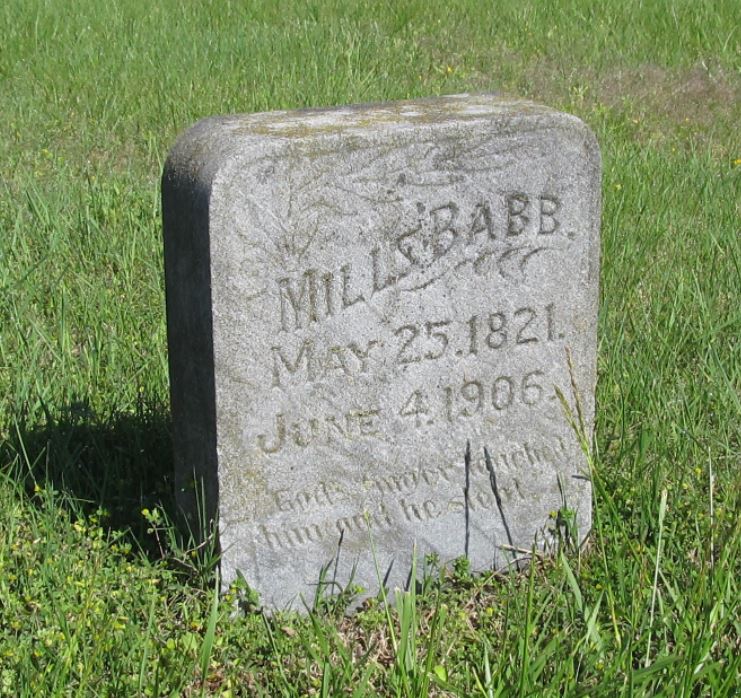
Mills M. Babb enlisted in the Confederate Army on February 28, 1862, joining Company I of the 1st South Carolina Infantry (Provisional Army), also known as McCreary’s Regiment. Mustered in at Smithfield, Virginia, he was one of many South Carolinians who answered the call to defend the Confederacy during the second year of the Civil War.
The regiment, originally organized by Colonel Maxcy Gregg and later commanded by Colonel Comillus W. “Wick” McCreary, was stationed in southeastern Virginia during Babb’s service. This region—marked by swamps, disease, and the looming threat of Union advances—was a difficult place to soldier. The 1st South Carolina Infantry was tasked with defending key positions around Suffolk and the James River, including the Confederate fortifications at Camp Huger.

Babb’s service record reveals a quiet but telling story. After enlisting, he was almost immediately listed as “sick at Camp Huger” in March 1862. Despite this rocky start, he returned to duty and was marked “present” from April through October 1862, a period that included the aftermath of the Peninsula Campaign and the Confederate defense of southeastern Virginia.

In November and December 1862, Babb was again present—just in time to receive his enlistment bounty, a cash incentive offered by the Confederate government to encourage enlistment. These bounties, often ranging from $50 to $100, were significant sums and sometimes served as motivation for men to enlist or remain in service.
But the new year brought renewed hardship. Babb was again listed as “absent sick” in January and February 1863. Then, in the muster roll for March and April 1863, he was marked as having deserted.


The sequence of events suggests a compelling, if sobering, narrative: Mills M. Babb may have remained in service just long enough to receive his bounty, only to drift away from the army shortly thereafter. Whether his desertion was premeditated or the result of deteriorating health and morale is unknown. What is clear is that Babb, like many soldiers on both sides, struggled with the physical and emotional burdens of war.
Desertion was not uncommon, especially during the long, cold winters and in disease-ridden camps. The Confederate Army, plagued by supply shortages, poor medical care, and waning morale, saw thousands of men abandon their posts. Some returned. Others did not.
Mills M. Babb’s service record may not be filled with battlefield heroics or promotions, but it offers a window into the lived experience of the average Confederate soldier—one who perhaps discovered, in the mud and misery of Virginia, that he simply wasn’t cut out for war.
The Tree
Mills is a member of the White Stags of VA/NC. His father died prior to the 1850 Census and thus we only know the name of his mother Jemima. We can tell that he is of this genetic lineage due to his place of residence. There are gaps in his tree with only the name Babb serving as a placeholder. There seems to be some connection to Lemuel Babb, Lemuel Mills Babb and Mills M Babb. They are all from the same county, but we cannot know the nature of their familial connection at this time.
One response to “Not Cut Out for War: The Confederate Service of Mills M. Babb”
Thank you, this was a heartbreaking story that adds dimension to how many of us frame war and the work of soldiers. Yes, not everyone is made for this. For some, taking the life of even an “enemy” is anathema.