
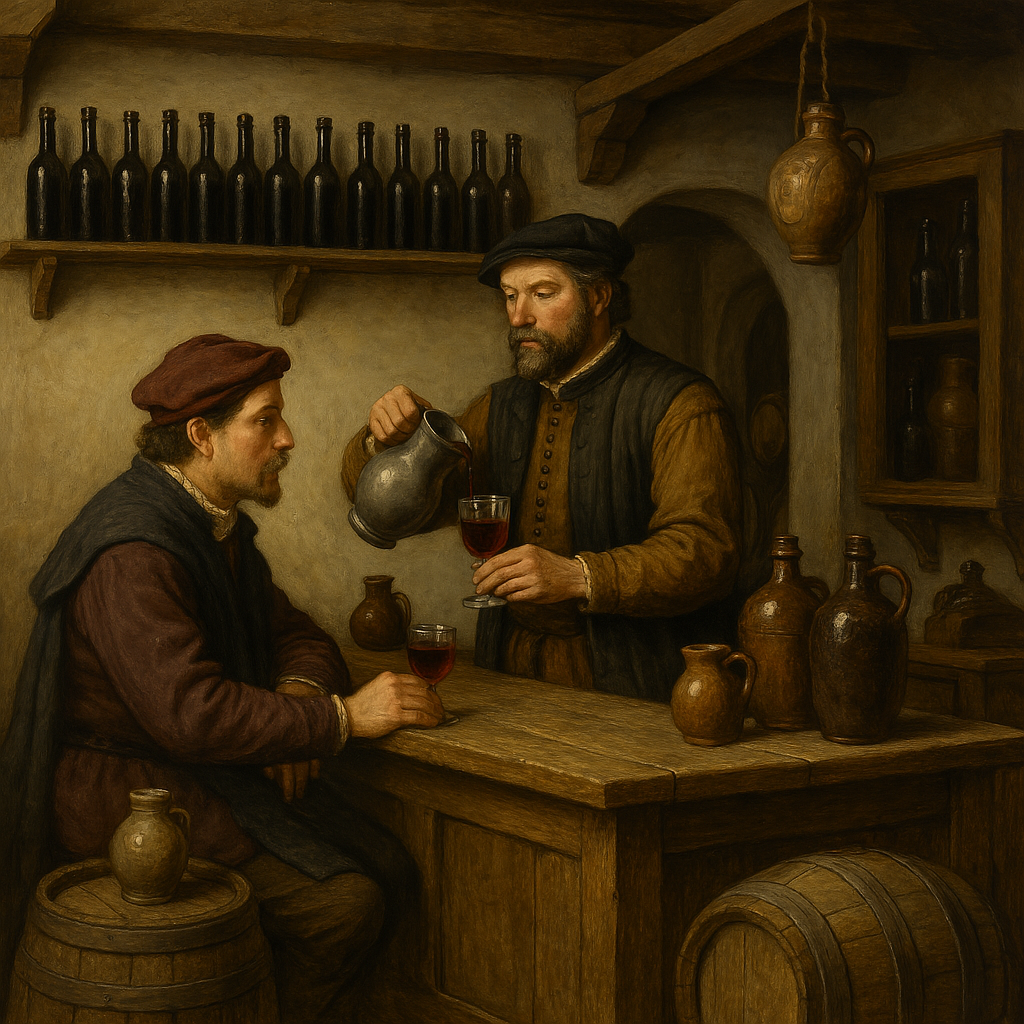
Before we dive into the wine trade and Tudor feasts, let’s take a moment to recognize Francis Babb, a key witness to the 1592 indenture that granted Robert Robyns exclusive rights to sell wine in St Albans. Babb wasn’t just a passive observer—he was a three-time Mayor of St Albans, a position that placed him at the heart of local governance and commerce. His repeated elections suggest he was a respected figure, trusted to oversee the town’s affairs during a period of economic expansion and royal influence.
Original Transcription:

Modern English translation:
Indenture dated September 27, in the 34th year of Queen Elizabeth I’s reign (1592), This agreement is made between the Mayor of St Albans on one side and Robert Robyns, a wine merchant from St Albans, on the other. The document states that the Queen, responding to the request of her trusted advisor, Sir Nicholas Bacon (a former Lord Keeper of the Great Seal of England, now deceased), and in support of a school within St Albans, granted the Mayor and their successors the authority to appoint two trustworthy and honest residents of St Albans to oversee the sale of all types of wine within the borough.
As part of this grant, the Mayor has selected their valued neighbor, Robert Robyns, to be one of the two wine merchants authorized to sell wine within St Albans for the rest of his life. In return for this privilege, Robyns must pay an annual rent of £10.
The document is signed by Robert Robyns, and witnessed by:
- John Clarke, Mayor
- Francis Babb
- James Carter
- Robert Gostwick (marked with his personal sign)
- Robert Shrimton [Four-time Mayor of St Albans]
- William Fysher
- John Hodsel
This document provides insight into governance, commerce, and education in 16th-century England, illustrating the Queen’s role in supporting local businesses and schools through grants.
The Merchant’s Royal Privilege
With Babb’s signature validating this official trade designation, Robyns stepped into a highly lucrative role. The Tudor era was defined by strict trade regulations, and wine was a controlled commodity—Robyns now held the monopoly over wine sales in the borough, a privilege granted by Queen Elizabeth I herself.
This wasn’t just about pouring fine claret or Rhenish wine; it came with financial obligations—Robyns paid an annual rent of £10, a sum that, while significant, paled in comparison to the profits he could generate from marked-up wine imports. Merchants of his status could expect earnings far above the average, solidifying their place among the wealthiest members of society.

Tudor Feasts: A Celebration of Wealth
Where there was fine wine, there were grand feasts. Tudor nobility reveled in multi-course banquets, featuring venison, boar, peacock, and swan. Sugar, still a rare commodity, was molded into elaborate sculptures, and bread choices reflected one’s social status—the rich indulged in manchet bread, while the lower classes relied on coarse rye loaves.
Feasts weren’t just about eating—they were performances. Music, dancing, and spectacle defined them, reinforcing social hierarchy in dazzling displays of power and wealth. And at the heart of it all? Wine—a merchant like Robyns ensured that no goblet was empty.
The Merchant’s Legacy
Francis Babb’s role in documenting and legitimizing this trade agreement reminds us of how commerce, law, and royal influence intersected to shape society. From strict regulations to exclusive monopolies, Tudor wine merchants weren’t simply traders; they were key players in local economies, bound by legal contracts, royal favor, and the watchful eyes of witnesses like Babb.
Never miss a post, by completing a free subscribing below!
One response to “Francis Babb: A Witness to History and Leadership in St Albans”
Very interesting, again thank you for your tireless work.