
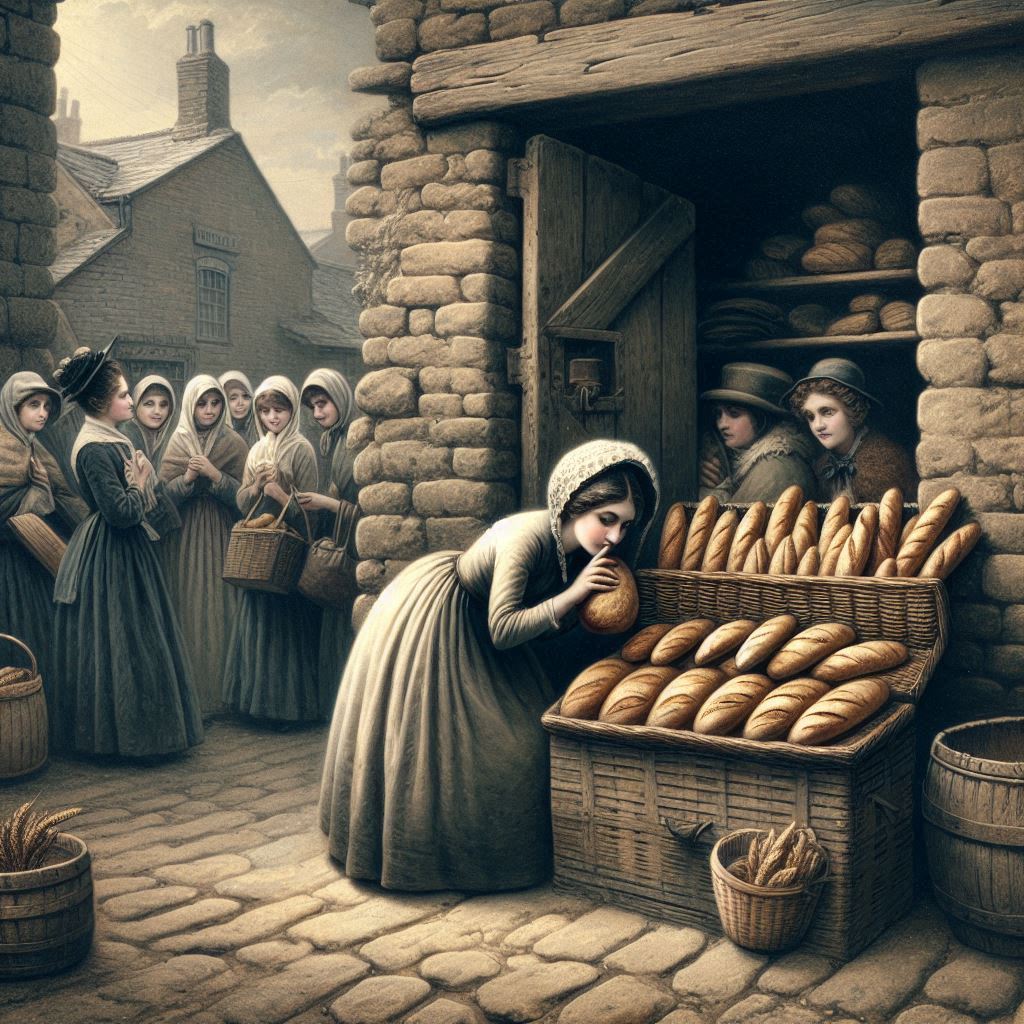
In 1850s England, “larceny” referred to the unlawful taking and carrying away of someone else’s personal property with the intent to permanently deprive the owner of it. It was a common law offense and was later codified under the Larceny Act of 18272. This act consolidated various statutes related to theft but did not provide a precise definition of larceny, leaving its interpretation to common law. The crime was categorized into “grand larceny” and “petty larceny,” depending on the value of the stolen property2. Over time, the distinction between these categories was abolished, and the offense was eventually replaced by the broader crime of theft under the Theft Act of 1968.
It is against this backdrop that we find Ann Babb in 1852, convicted of larceny. It was likely a form of petty larceny as she was sentenced to 3 months imprisonment. On the same page we find a passer of counterfeit coin given 12 months and malicious assault given 2 years. 3 months is the shortest sentence given on this document.

We can only guess as to what she was stealing. Maybe it was a loaf of bread to feed her starving family? Or maybe that is the plot of Les Misérables by Victor Hugo. Anyway, you get the drift.
We don’t have enough information on Ann to make an exact connection into the Babb tree. But it adds a second tree fragment in the county.
Tired of missing these posts on Facebook? Subscribe for free and receive posts in your inbox.
Lose-End Files Update: 879 Files of 989 remain (89%)